
NORTH BALI
Invest Buleleng — Invest Buleleng
property and business investment in Buleleng North Bali — land and villa investment, the new North Bali airport corridor, ROI yields, leasehold vs.
Explore Invest Buleleng
Investing in Buleleng, North Bali
Investing in Buleleng, North Bali, offers a prime opportunity for property and business growth. With strategic developments like the new airport corridor and burgeoning tourist hotspots, Buleleng promises potentially lucrative ROI for investors. Key benefits include expanding infrastructure and accessibility, favorable investment zones with government incentives, and high rental yields driven by growing tourism. For those looking to invest Buleleng in a structured way, understanding local rules, title options, and realistic returns is essential.
Why Invest in Buleleng?
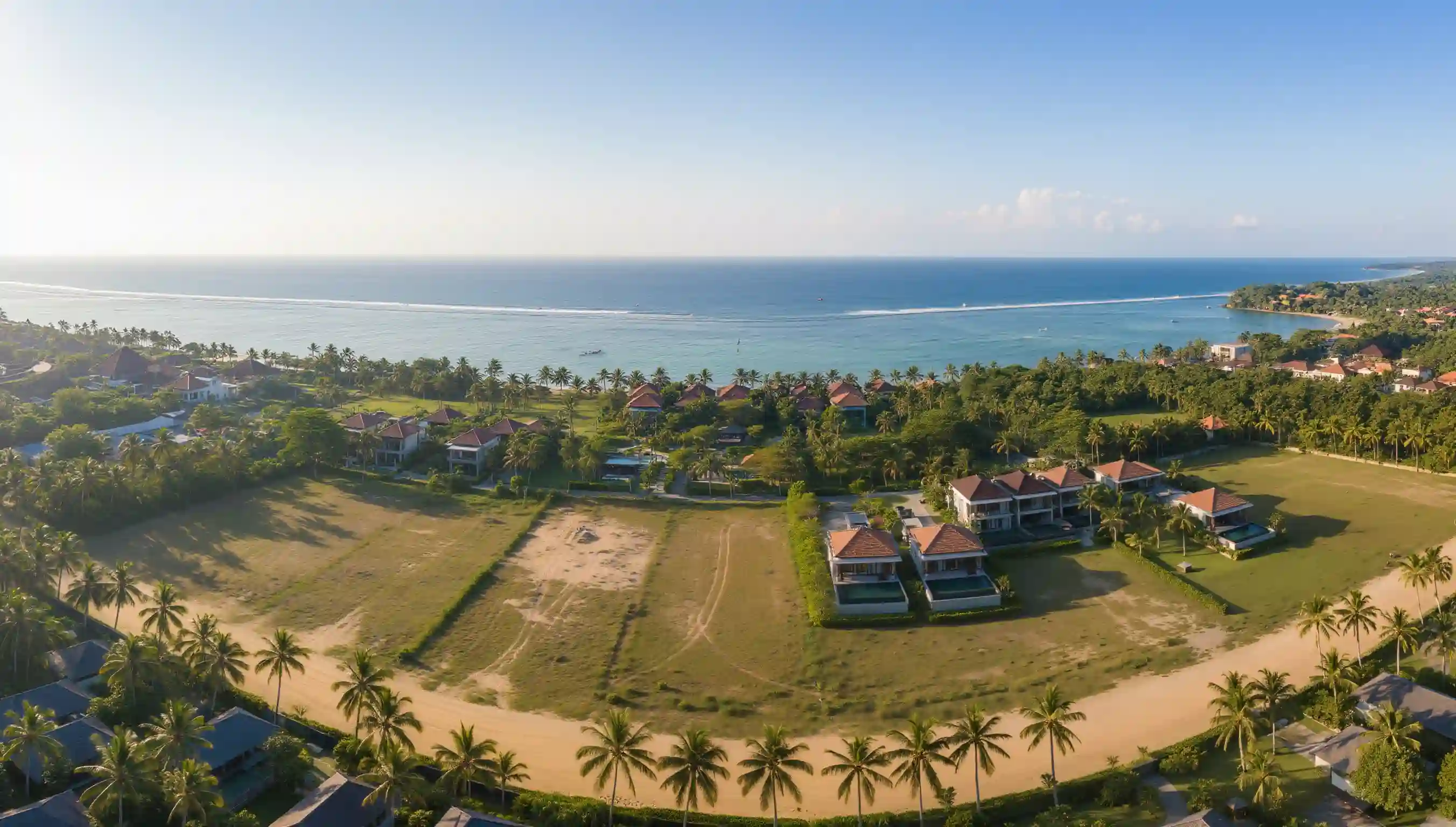
Buleleng provides a unique investment landscape characterized by its strategic location and growing infrastructure base. The regency stretches along North Bali’s coastline, covering areas such as Singaraja (the administrative capital), Lovina, Pemuteran, Banjar, and the Munduk highlands. These locations combine established local communities with emerging tourism and commercial activity.
With the new airport in North Bali slated to open by 2026 (government planning target), connectivity to major Indonesian cities and selected international hubs is expected to increase significantly. This will complement existing access via the Singaraja–Bedugul–Denpasar corridor and the coastal road connecting to Gilimanuk and East Java.
Property investors can anticipate increased demand for both residential and commercial developments, driven by a projected influx of tourists and expats seeking a quieter, nature-focused lifestyle than South Bali, yet still with strong infrastructure potential. Many investors aiming to invest Buleleng are already securing early positions in land and villa developments in anticipation of these changes.
Current Market Performance
Current statistics indicate that Buleleng has seen a steady rise in property values, with an average annual increase of around 8% over the past five years. While individual projects vary, indicative 2026 price ranges often discussed locally include:
- Coastal land (tourism-zoned areas such as Lovina, Pemaron, Anturan): indicative IDR 350,000–1,200,000 per m², depending on exact frontage and access.
- Hill and valley land with sea views (e.g., Kayuputih, Tigawasa, near Munduk): indicative IDR 200,000–800,000 per m².
- Completed mid-market villas (2–3 bedrooms with pool) in established areas: indicative USD 160,000–300,000 equivalent.
These numbers are indicative only and subject to rapid change depending on infrastructure announcements, zoning confirmation, and local market sentiment.
The New North Bali Airport Corridor
The North Bali airport corridor is a major planned infrastructure project that is reshaping expectations for the region’s economic development. Scheduled by authorities for completion around 2026, the new airport is intended to reduce the concentration of traffic in South Bali and open alternative tourism and logistics routes.
According to the Indonesian Ministry of Transportation, the new airport is expected to handle up to 10 million passengers annually by 2030. This projected throughput would generate substantial demand for:
- Accommodation: hotels, guesthouses, boutique villas, and serviced apartments.
- F&B: restaurants, cafes, beach clubs, and local culinary venues.
- Supporting services: logistics, warehousing, transport, tour operators, wellness centers, and co-working spaces.
The corridor concept usually refers not only to the airport itself but to the supporting toll roads, arterial roads, and designated development areas leading from the airport toward Singaraja, Lovina, and Central Bali. Investors looking to invest Buleleng often focus on parcels within reasonable access to these planned arteries, while checking the official spatial planning documents (RDTR).
Key Locations Around the Corridor
- Singaraja: Administrative and education center, with universities, hospitals, and government offices. Attractive for commercial buildings, shops, and long-term rentals.
- Lovina Coast: Established tourism strip known for dolphin tours and calm beaches. Suited to villas, boutique hotels, and F&B concepts.
- Pemuteran & Menjangan area: Popular for diving and nature tourism, with scope for eco-resorts and sustainable tourism operations.
- Munduk highlands: Cooler climate, waterfalls, and agrotourism; suitable for retreats, wellness resorts, and nature lodges.
Understanding ROI Yields in Buleleng
Investors in Buleleng can expect competitive return on investment (ROI) yields compared with more mature Bali markets, although occupancy and nightly rates may still be stabilizing as infrastructure improves.
The current rental yield for villas in many parts of Buleleng averages around 7–10% per year (gross) based on purchase price, assuming professional management and effective marketing. Some high-performing properties near Lovina and around the hills above the coast can reach higher indicative yields if they combine strong design, views, and good access roads.
Typical Revenue Drivers
- Short-term vacation rentals: Daily/weekly bookings through online travel agencies (OTAs), especially in Lovina, Pemuteran, and Munduk.
- Mid-term stays: One- to six-month stays by remote workers and retirees seeking lower costs than South Bali.
- Long-term leases: Yearly rental contracts to expats or domestic professionals working in Singaraja, schools, or local businesses.
As an indicative 2026 example, a well-designed 2–3 bedroom villa with pool and good access might achieve:
- Average nightly rate: USD 80–160
- Occupancy: 45–65% per year, depending on location and marketing
- Gross annual revenue: roughly USD 13,000–38,000 equivalent
Operating costs (staff, maintenance, utilities, marketing, management fees, and local taxes) often range between 25–40% of gross revenue. Actual ROI will depend on purchase price, financing, and how efficiently the property is managed.
Leasehold vs. Freehold: What You Need to Know
Property ownership structures in Indonesia are highly regulated and differ for Indonesian citizens and foreign investors. Understanding these concepts is essential before you commit funds.
Freehold (Hak Milik) and PT PMA
Freehold (Hak Milik) is the strongest form of land title, but it is generally available only to Indonesian individuals and certain Indonesian legal entities. Foreign investors commonly access property through a foreign-owned company called a PT PMA (Perseroan Terbatas Penanaman Modal Asing).
Key points about PT PMA and freehold-related structures:
- A PT PMA can hold titles such as Hak Guna Bangunan (HGB) and, in some cases, convert land from Hak Milik to HGB for business purposes.
- HGB grants the right to build and use the land for a specific period (e.g., 30 years, extendable).
- Setting up a PT PMA involves minimum capital requirements (often IDR 10 billion “planned” capital, with indicative paid-up capital requirements discussed with your consultant) and reporting obligations to BKPM/Ministry of Investment.
Leasehold (Hak Sewa) Arrangements
Leasehold (Hak Sewa) is a common structure for foreigners who do not wish to form a PT PMA. A typical leasehold may run for 25–30 years with options to extend. In Buleleng, leasehold is often used for villa developments and boutique resorts on tourism-zoned land.
Practical considerations:
- Ensure the lease agreement is drafted and executed in Indonesian by a licensed notaris/PPAT.
- Clearly state extension options, indexation of lease fees, and permitted use (commercial, residential, etc.).
- Confirm zoning (RDTR) so the intended use is lawful and building permits (IMB or its successor, PBG) can be obtained if constructing new buildings.
Hak Pakai for Residential Use
Some foreign individuals may obtain Hak Pakai (Right to Use) for residential purposes under certain conditions, especially when they hold a KITAS/KITAP (residence permit) and meet minimum investment thresholds for the property. Hak Pakai allows usage for a specified period and can, in certain cases, be renewed.
Because these structures involve sensitive legal details, consultation with a qualified land lawyer and notaris/PPAT in Buleleng or Denpasar is strongly recommended before committing to a specific title route.
Investment Zones and Government Incentives
Buleleng features areas that have been prioritized for tourism and economic development under national and provincial regulations. Parts of North Bali are discussed as potential KEK (Kawasan Ekonomi Khusus) or other strategic zones, which, when implemented, can provide investors with:
- Selected tax facilities (depending on the final KEK regulations).
- Simplified licensing and one-stop service processes for certain activities.
- Land-use certainty based on the applicable RDTR (Rencana Detail Tata Ruang – detailed spatial plan).
When you consider where to invest Buleleng, review the latest RDTR maps and local regulations, paying particular attention to whether land is zoned for:
- Tourism accommodation and commercial use.
- Residential use only.
- Green/open zones, agriculture, or protected forest (where building may be restricted or prohibited).
Legal and Tax Considerations in Buleleng
Property and business transactions in Buleleng fall under Indonesian national law, with local implementation at the regency level. Key legal and tax aspects include transfer taxes, income taxes on gains, and recurring obligations.
Key Taxes on Property Transactions
| Tax / Fee | Typical Rate (Indicative) | Who Commonly Pays |
|---|---|---|
| BPHTB (Bea Perolehan Hak atas Tanah dan Bangunan – land and building acquisition duty) | Around 5% of the taxable value above a non-taxable threshold, subject to local rules | Usually the buyer, by agreement |
| PPh Final (Income tax on property sale) | Often 2.5% of the declared transaction value for individual sellers (indicative) | Usually the seller, by agreement |
| Notaris/PPAT fees | Negotiated; commonly around 0.5–1% of the transaction value or a fixed fee | Split or agreed between buyer and seller |
Actual rates and bases can change, and special rules may apply for PT PMA structures or KEK areas. A local tax consultant should be engaged to provide current, specific guidance.
Ongoing Taxes and Compliance
- PBB (land and building tax): Annual property tax based on government-assessed value.
- Corporate income tax for PT PMA entities operating rentals or businesses in Buleleng.
- VAT (PPN) considerations if dealing at scale or in certain types of developments.
Failure to comply can create issues when selling, renewing permits, or extending leases, so proper accounting and reporting are essential from the start.
Working with Professionals and Due Diligence
Successful investment in Buleleng, especially as a foreigner, relies heavily on careful due diligence. Recommended steps include:
- Title verification and land survey to check boundaries, access roads, and any encumbrances or overlapping claims.
- Zoning confirmation via RDTR and inquiries at the local planning office (Dinas PUPR or equivalent).
- Environmental and social checks, particularly near rivers, beach setbacks, or protected areas.
Always engage a licensed notaris/PPAT in Bali for deed preparation, title transfer, and registration, and consult a qualified lawyer for contract review. A tax consultant can help you structure purchases and operations in a tax-efficient and compliant manner.
The operator of this site acts as an independent broker and concierge, not as the owner of the assets presented. Any introductions to landowners, developers, or service providers are made on that basis, and you should conduct your own assessments before proceeding.
Frequently Asked Questions
Can foreigners directly own freehold land in Buleleng?
Foreign individuals cannot directly hold Hak Milik freehold land in their personal name under current law. Common options include forming a PT PMA to obtain HGB on land, using properly drafted leasehold (Hak Sewa) structures, or seeking Hak Pakai where available. Always confirm your structure with a licensed notaris/PPAT and lawyer before paying deposits.
How much capital should I prepare for a small villa project?
Indicative 2026 figures for a two- or three-villa project (2–3 bedrooms each, pool, mid-market standard) could range from USD 450,000–900,000 all-in, depending on land price, design standard, and infrastructure costs (roads, retaining walls, utilities). A detailed budget with contingency (often 10–15%) is advisable.
Is financing available for foreign investors?
Local bank financing for foreigners is limited and usually requires specific conditions, such as a PT PMA with clear financials or cooperation with Indonesian partners. Many investors rely on self-funding or offshore financing. Discuss suitable options with an international mortgage adviser or local bank familiar with foreign investment.
Final Notes and Next Steps
All information provided here is general in nature and does not constitute legal, tax, or investment advice. Regulations, zoning rules, and tax rates can change, and each project has its own risks and details. Before committing to any transaction in Buleleng, you should consult a licensed notaris/PPAT, a qualified Indonesian lawyer, and a tax consultant with Bali experience.
If you would like curated introductions to trusted professionals, site visits, or project assessments in North Bali, you can reach out to our concierge for independent brokerage and support.